Greetings avid blog readers. Two weeks have passed and we're back in Kumasi once again to pick up our renewed visas and update this page.
The highlight of the fortnight came this Saturday when we brought all the boys from the house for a day out at a swimming pool here in Kumasi. Everyone was so excited! The boys put on their bestest clothes and we set off straight after breakfast so as to get a full day out. The pool was at a swanky hotel but luckily it was very quiet so we had it all to ourselves, which meant we could do all the shouting, splashing and bombing we wanted. At the beginning of the day some of the boys were less confident with swimming so they stayed mainly in the shallow end, but by the end they had all perfected the flailing limb stroke and were roaming all over.
After hours at the pool we headed to another hotel closer to the station which has a good restaurant. The boys all had egg fried rice and CHICKEN! Meat is a no no in the Namaskar house, but none of the boys are vegetarian so they take any opportunity to eat as much meat as possible, even the bones were demolished. Holly and I had pizza which was an equally significant treat for us. Then to top it all off we got ice cream on the tro-tro home - days don't come much better than that.
Since the last entry school has been ticking along nicely. There was another holiday out of the blue on Wednesday of last week, but we've got used to these days off springing up every now and then so it was less of a surprise. What was a bit of a shock was the realisation that we only have two weeks of teaching left! The last two weeks of term will be devoted to revision and then the end of year exams, so it feels as if we're starting to wind down just as we've got going. There won't now be much chance for me to introduce new topics and programs in the remaining classes, but still, I feel we've already been able to give all the classes a good grounding in computer use.
Just a brief entry from me this time, but I'm sure Holly "touch-type" Thomas will be able to give a fuller account. Hope everyone at home is well, and enjoying the summer time!
Love Jack
Monday, 6 July 2009

Monday, 22 June 2009
We've now been in Ejura for a month and a half, and the time has flown by. There is now a definite weekly routine. Monday is market day so school tends to fizzle out early, we then wander round the stalls after lunch picking up any essentials for the week ahead and sampling some of the delicacies on offer. Some of the favourites are sweet balls (donut like things made from Cassava flour), fried cheese, soya kebabs (actually better than most of the meat alternatives), and Klum Klwi (ground peanuts shaped into sticks and fried). Hmm Hmmmn.
Tuesday is the beginning of the week proper. There is a full day of classes, and attendances are high. I've been running after school lessons for the older children, and Holly does library, so we tend to finish about four. Everything is quite relaxed from then on, we tend to read, plan for the next days lessons, shower, walk around the town or into the farm land, and sit around talking. At six-thirty the sun rapidly goes down, and at seven-ish we get dinner out and start trying to gather everyone round. With five volunteers, six boys, and Richard (the assistant headteacher) it can take a while to get all assembled. After dinner we sometimes go to a spot (bar) for a beer or a coke, or just stay around the house listening to music and chatting. Recently we've bought some DVD's so we occasionally watch a film in the computer room.
Wednesday and Thursday proceed in much the same way, unless of course there's heavy rain. Rain means attendances go down at school and lessons are generally delayed, it also often causes the power to go down which puts a stop to my computer classes.
Friday is the beginning of the weekend and also a big Mosque day, so traditionally this means attendances are low and school closes early. Annoyingly this is when many of my computer classes have been scheduled for, I think the idea being it will be an incentive for the children to come to school. This is fine most weeks and most of the children do turn up, but Friday is also when many impromptu holidays come up so the school is closed completely.
On that note, I now understand how people find out about local goings on and celebration days, there is a huge loudspeaker in the centre of town that broadcasts up and coming events. This is why no one knows what is going on until the day before, when the announcement is made. They also announce if children go missing, or if there's a fire, or any things of importance like this.
The weekends, when we stay in Ejura, are spent doing laundry, cleaning rooms, and lazing around. Though this weekend we were more constructive and painted the boys new bedroom which has just been added onto the house. On Sundays I have also been helping Simon out with the cooking. So far I've done a coconut curry which worked really well - surprisingly they don't ever use coconut in cooking despite the local abundance. And also I did a spicy "chickpea", tomato and carrot sauce. That was nice as well, but the "chickpeas" (they're like chickpeas but bigger and have a slightly different taste) took 4 hours of boiling before they went soft – not a process I'm in a hurry to go through again. I have a huge respect for Simon, its hard enough regularly cooking for fifteen people but to do so on charcoal fires without the use of onion, garlic, mushroom, or meat is very limiting indeed. Good job.
First of all, sorry I haven't written in ages. Fate, slow computers and Kumasi's internet drought have come between me and this blog for the last few weeks! Hopefully today I'm going to try and get some photos up on here or Facebook, but last time it ended in disaster, so we'll see!
Since I last wrote, we've lost two volunteers. Noa from Israel and Jasmine from America set off for home on Friday morning. The house is very quiet without them, and I'm very jealous of Jasmine who said that the first thing she'll drink in New York will be a pint of cold milk, and that for the next week absolutely everything and I mean EVERYTHING she eats is going to be topped with cheese. She'd been here for six months, so I expect she'll have a lot of cravings to get through! Noa is hoping she'll have contracted a mild dose of marlaria, or have a dormant spider bite, so that she won't have to go back to work when she gets home. Fingers crossed!
Last time I wrote we were on our way to the Hand in Hand project in Nkoranza. Set on beautiful grassy grounds overlooking farmland and forest, it's a children's home that funds itself by renting out guest rooms. In Ghana it is believed that when a woman gives birth to a mentally or physically handicapped child, it is because she has been attacked by water spirits, so the newborn babies are often left by the side of the river to be 'reclaimed' by the water. Institutions for disabled children are reputedly more damaging than helpful for children. If they don't have serious issues when they go in, they will when they come out. Hand in Hand takes abandoned children who have been left on their premises, given by families who can't cope or removed from state institutions. Set up by some Ghanaian and Dutch doctors, the project only takes a very small number of western volunteers. For the most part, each child is assigned with a constant Ghanaian volunteer who lives at the home full time, long term and acts as a parent to the one or two children they are helping. Obviously there is a lot of fear in Ghanaian culture of these kinds of problems, but Hand in Hand are gradually trying to change attitudes in the local community so that disabled people are now a more accepted part of Nkoranza life. The home itself is beautiful. You'd struggle to find a better equipped children's home in Britain. There were individual chalets for 'parents' and their children, there was a colourful play room with a ball pit - one little boy with cerebral palsy demonstrated it to us, divebombing in with a massive grin and wriggingling about for about five minutes - there was a play park and even a swimming pool for the kids. there's a school just outside the grounds, and in the complex there was a gorgeous outdoor church, where they congregate every Sunday among the breathtaking rock formations. Disabled adults who have been helped by Hand in Hand often stay on to work there, serving in the restaurant, greeting visitors and working in the craft workshops. They has a kente clothmaking workshop, they fired recycled glass beads and made necklaces, purses and bags to sell in the giftshop. The project was really trying hard to be self sufficient, and not have to rely on donations any more, and you could really see that it was going that way. On our second day there we met Bob, a vivacious Chicago Jewish playwright with a song or literary quote or dramatic reference for every possible sentence you said to him. He is the husband of Ineke, one of the founders. Their home at the project was covered in black and white photos, Ineke's artwork, piles of movies, music and books. There were photos of Ineke being decorated by the Ghanaian president, as she is the founder of the National Health Insurance System in Ghana. Bob assured us he never wanted to work for Good, he just happened to marry a good person. He told us that Ineke was an MD, had written books, was an artist and a lifelong volunteer, but all she ever wanted to be was a clown.
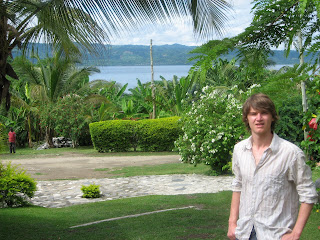
Another trip we made was to Lake Bosumtwi, which was 45 minutes from Kumasi, the main town near us. We stayed at a lovely guesthouse right on the lake and spent a lazy day and two nights reading our books and spending far far too much money on CHEESE! and wine. The lake was very still and peaceful, one legend is that it is the home of the god Twi, another that it is the place where souls go to in between when they are alive and dead. The villages nearby were very, very quiet, and not quite as friendly as Ejura, so we couldn't do much exploring. It almost made me feel nostalgic for the hordes of Ejuran children running towards us at every turn screaming 'How are you?' 'How are you?' 'How are you?' Almost.
School is going very good. Madam Paulina and I have been working on the P1 English lessons, and she's getting into a routine now, so I've started to break away and do some remedial lessons, which are lots of fun because their more creative and very rewarding. It's unbelievable, but we only have a month left of school before the exams start. Time is going so fast.
We found some pirate DVDs in Kumasi, so the Namaskar boys have been spending a few evenings watching Disney films and Die Hard.
The Girls' Club is going very well, they've joined a group of local schools who have guest speakers on issues like hygeine and teen pregnancy, but for some reason this means that we now have to let the boys come to the girls club, which I still don't quite get.
The local women have worked out that us Obrunis love babies, so we're getting regular deliveries of babies to cuddle, with instructions to 'send it back when it's hungry'. Babies are often cared for by their brothers and sisters, so we don't usually mind relieving a child of her younger sibling so that the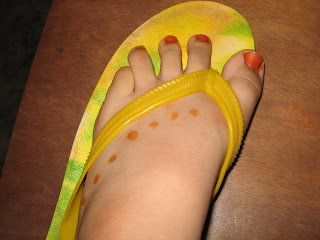 kids can play in Namaskar House, and the babies are very cute - even Jack has been known to tickle some feet when he thinks no-one's looking.
A week or so ago us girls applied lei lei, or henna. We bought it at market as crushed leaves, which when mixed with water and left on the skin leave a red stain. Ghanaian women cover their whole hands, but it looks a little ridiculous on our skin, so we just did our nails.
I think that's all my news - I'm missing people at home, but it's very fun here, so I'm not missing you too much!! Hopefully I'll be able to write more in a week or so.
Love you all, miss you all xx
Since I last wrote, we've lost two volunteers. Noa from Israel and Jasmine from America set off for home on Friday morning. The house is very quiet without them, and I'm very jealous of Jasmine who said that the first thing she'll drink in New York will be a pint of cold milk, and that for the next week absolutely everything and I mean EVERYTHING she eats is going to be topped with cheese. She'd been here for six months, so I expect she'll have a lot of cravings to get through! Noa is hoping she'll have contracted a mild dose of marlaria, or have a dormant spider bite, so that she won't have to go back to work when she gets home. Fingers crossed!
Last time I wrote we were on our way to the Hand in Hand project in Nkoranza. Set on beautiful grassy grounds overlooking farmland and forest, it's a children's home that funds itself by renting out guest rooms. In Ghana it is believed that when a woman gives birth to a mentally or physically handicapped child, it is because she has been attacked by water spirits, so the newborn babies are often left by the side of the river to be 'reclaimed' by the water. Institutions for disabled children are reputedly more damaging than helpful for children. If they don't have serious issues when they go in, they will when they come out. Hand in Hand takes abandoned children who have been left on their premises, given by families who can't cope or removed from state institutions. Set up by some Ghanaian and Dutch doctors, the project only takes a very small number of western volunteers. For the most part, each child is assigned with a constant Ghanaian volunteer who lives at the home full time, long term and acts as a parent to the one or two children they are helping. Obviously there is a lot of fear in Ghanaian culture of these kinds of problems, but Hand in Hand are gradually trying to change attitudes in the local community so that disabled people are now a more accepted part of Nkoranza life. The home itself is beautiful. You'd struggle to find a better equipped children's home in Britain. There were individual chalets for 'parents' and their children, there was a colourful play room with a ball pit - one little boy with cerebral palsy demonstrated it to us, divebombing in with a massive grin and wriggingling about for about five minutes - there was a play park and even a swimming pool for the kids. there's a school just outside the grounds, and in the complex there was a gorgeous outdoor church, where they congregate every Sunday among the breathtaking rock formations. Disabled adults who have been helped by Hand in Hand often stay on to work there, serving in the restaurant, greeting visitors and working in the craft workshops. They has a kente clothmaking workshop, they fired recycled glass beads and made necklaces, purses and bags to sell in the giftshop. The project was really trying hard to be self sufficient, and not have to rely on donations any more, and you could really see that it was going that way. On our second day there we met Bob, a vivacious Chicago Jewish playwright with a song or literary quote or dramatic reference for every possible sentence you said to him. He is the husband of Ineke, one of the founders. Their home at the project was covered in black and white photos, Ineke's artwork, piles of movies, music and books. There were photos of Ineke being decorated by the Ghanaian president, as she is the founder of the National Health Insurance System in Ghana. Bob assured us he never wanted to work for Good, he just happened to marry a good person. He told us that Ineke was an MD, had written books, was an artist and a lifelong volunteer, but all she ever wanted to be was a clown.

Another trip we made was to Lake Bosumtwi, which was 45 minutes from Kumasi, the main town near us. We stayed at a lovely guesthouse right on the lake and spent a lazy day and two nights reading our books and spending far far too much money on CHEESE! and wine. The lake was very still and peaceful, one legend is that it is the home of the god Twi, another that it is the place where souls go to in between when they are alive and dead. The villages nearby were very, very quiet, and not quite as friendly as Ejura, so we couldn't do much exploring. It almost made me feel nostalgic for the hordes of Ejuran children running towards us at every turn screaming 'How are you?' 'How are you?' 'How are you?' Almost.
School is going very good. Madam Paulina and I have been working on the P1 English lessons, and she's getting into a routine now, so I've started to break away and do some remedial lessons, which are lots of fun because their more creative and very rewarding. It's unbelievable, but we only have a month left of school before the exams start. Time is going so fast.
We found some pirate DVDs in Kumasi, so the Namaskar boys have been spending a few evenings watching Disney films and Die Hard.
The Girls' Club is going very well, they've joined a group of local schools who have guest speakers on issues like hygeine and teen pregnancy, but for some reason this means that we now have to let the boys come to the girls club, which I still don't quite get.
The local women have worked out that us Obrunis love babies, so we're getting regular deliveries of babies to cuddle, with instructions to 'send it back when it's hungry'. Babies are often cared for by their brothers and sisters, so we don't usually mind relieving a child of her younger sibling so that the
 kids can play in Namaskar House, and the babies are very cute - even Jack has been known to tickle some feet when he thinks no-one's looking.
A week or so ago us girls applied lei lei, or henna. We bought it at market as crushed leaves, which when mixed with water and left on the skin leave a red stain. Ghanaian women cover their whole hands, but it looks a little ridiculous on our skin, so we just did our nails.
I think that's all my news - I'm missing people at home, but it's very fun here, so I'm not missing you too much!! Hopefully I'll be able to write more in a week or so.
Love you all, miss you all xx
Tuesday, 9 June 2009
Jack:
I've now decided to abandon theory lessons for this term, so as to get the children practicing on the computers for two periods a week. I think next term once all the children are more familiar with how to use a computer the theory lessons will become more useful. The lessons I have been doing are going really well, with all the kids super keen to come and learn (every time I walk in the school they swamp me shouting “Sir! Sir! ICT today?”).
All the classes can now move, click, and drag with the mouse, and they know where to hold their hands on the keyboard, and how to type with the “home row” keys (the keys over which your fingers should rest). Its amazing the difference it makes if you learn to type correctly from the off, it took me ages to retrain myself two finger typing, but the children are picking it up really quickly.
Last Wednesday I watched the Champions league final, my first televised game in Africa. The game was rubbish (unless you supported Barcelona) but the atmosphere was super lively. It was shown in the community hall which has this huge open air courtyard where they projected the game onto one of the walls. I went with the house cook, Simon, and most of the boys from the house, they advised to get there early so as to get seats and its a good job we did as by kick off the whole courtyard was packed.
There was lots of betting, and shouting about betting, before the match, and when the lineup was announced everybody was whooping and chanting as if they were in the stadium. Early on the crowd seemed to be quite balanced, but when Barcelona scored their supporters either became more vocal or some people switched allegiances, I suspect a bit of both. By the end it was positively partisan.
We were watching the game on the American channel ESPN and a personal highlight of the whole experience was seeing Shaka Hislop and Robbie Mustoe as the half time “experts”. Of course neither could match the insightful analysis and charisma of Alan Shearer - still it's good to see these two former Goliaths of the Premiership have gone to a good home.
We had PTA meeting last Friday after which all the parents and committee members came to see the computer room, they were so impressed with the computers and everything they can do. People were coming up and shaking my hand, slapping each others backs etc. After they had all seen the room everyone came back in and said a prayer of thanks for the computers and the opportunity for their children.
This week is sports week for all the schools in this area of Ejura. We were told at the last minute that this would mean no classes for the whole schools, as everybody would be going to the fields to watch. It was frustrating to hear that, one because we were given no notice and two because the school seems to have only done one full week in the month since we arrived. But them it was even more frustrating to arrive at school on Monday to find that there would be school every morning after all!
When I first arrived here I thought a major problem was the lack of communication, now I'm starting to think its more just that no one knows whats going on in the first place. This seems incomprehensible to us volunteers from a European/American perspective, where something like an inter-school sports week would have been planned and timetabled months in advance. Here its much more the case that people arrive in the morning and decide from there whats going to happen, and somehow amid a general sense of chaos thing do generally happen. Still I don't think four and a half months here will be enough for me to get used to this system – whats wrong with setting a time in advance and sticking to it!!!
Holly will write in a few days, and hopefully upload a few photos too.
I've now decided to abandon theory lessons for this term, so as to get the children practicing on the computers for two periods a week. I think next term once all the children are more familiar with how to use a computer the theory lessons will become more
 useful. The lessons I have been doing are going really well, with all the kids super keen to come and learn (every time I walk in the school they swamp me shouting “Sir! Sir! ICT today?”).
All the classes can now move, click, and drag with the mouse, and they know where to hold their hands on the keyboard, and how to type with the “home row” keys (the keys over which your fingers should rest). Its amazing the difference it makes if you learn to type correctly from the off, it took me ages to retrain myself two finger typing, but the children are picking it up really quickly.
Last Wednesday I watched the Champions league final, my first televised game in Africa. The game was rubbish (unless you supported Barcelona) but the atmosphere was super lively. It was shown in the community hall which has this huge open air courtyard where they projected the game onto one of the walls. I went with the house cook, Simon, and most of the boys from the house, they advised to get there early so as to get seats and its a good job we did as by kick off the whole courtyard was packed.
There was lots of betting, and shouting about betting, before the match, and when the lineup was announced everybody was whooping and chanting as if they were in the stadium. Early on the crowd seemed to be quite balanced, but when Barcelona scored their supporters either became more vocal or some people switched allegiances, I suspect a bit of both. By the end it was positively partisan.
We were watching the game on the American channel ESPN and a personal highlight of the whole experience was seeing Shaka Hislop and Robbie Mustoe as the half time “experts”. Of course neither could match the insightful analysis and charisma of Alan Shearer - still it's good to see these two former Goliaths of the Premiership have gone to a good home.
We had PTA meeting last Friday after which all the parents and committee members came to see the computer room, they were so impressed with the computers and everything they can do. People were coming up and shaking my hand, slapping each others backs etc. After they had all seen the room everyone came back in and said a prayer of thanks for the computers and the opportunity for their children.
This week is sports week for all the schools in this area of Ejura. We were told at the last minute that this would mean no classes for the whole schools, as everybody would be going to the fields to watch. It was frustrating to hear that, one because we were given no notice and two because the school seems to have only done one full week in the month since we
 arrived. But them it was even more frustrating to arrive at school on Monday to find that there would be school every morning after all!
When I first arrived here I thought a major problem was the lack of communication, now I'm starting to think its more just that no one knows whats going on in the first place. This seems incomprehensible to us volunteers from a European/American perspective, where something like an inter-school sports week would have been planned and timetabled months in advance. Here its much more the case that people arrive in the morning and decide from there whats going to happen, and somehow amid a general sense of chaos thing do generally happen. Still I don't think four and a half months here will be enough for me to get used to this system – whats wrong with setting a time in advance and sticking to it!!!
Holly will write in a few days, and hopefully upload a few photos too.
Saturday, 23 May 2009
Our First Fortnight in Ghana
HOLLY:
During the first week of school, most of the children don't come, so although we've been here two weeks, we've actually just finished our first full week of school.

Our first taste of school was an eye-opener. The classrooms are very bare, and the teachers work a lot by rote-learning. The children are always very friendly and eager to talk, but it can be overwhelming when thirty children are waving their books at you shouting 'Madam, finished, mark, mark!' I decided to teach Primary One, and have also volunteered to run the library. Although the first few lessons were a real shock, the teacher I'm working alongside, Madam Paulina, is very friendly and very eager to make an effort and improve her teaching. Her maths lessons are already proficient enough that I've decided to take time out from them. I'm hoping to use this time to do some smaller group teaching with some of the remedial students, so I'm getting very excited about how best to teach the ABCs! We moved the library from Namaskar House to the remedial room at school this week, and I've been decorating it with weekly themes. Next week is the grand opening, with the theme of animals. I've made posters and will make selections of books about animals for students of all the different ages at school.
At the moment, two past volunteers, Noa and Caro (who is the volunteer co-ordinator for the Ejura project) are here reviewing the project and trying to improve the administration and general running of the project. They have decided quite recently to make it clear that volunteers are not teachers, but teaching assistants. We're here to support the Ghanaian teachers to become better teachers, which is far more sustainable and provides continuity for the children. They are also trying to set up a Girls Club at school. Based on another local school's idea, this would be a meeting one day a week for Girls at Namaskar School to support them if they choose to be abstinent to avoid HIV/Aids, or to provide honest information and discussion about sexuality and women's issues. Although the school only caters for primary and junior secondary school, many of the children start late or are held back in classes, so some of the older students are young women and it's a really valuable resource for them.
The storms here are amazing. Often, even on dry evenings, we see flashes of lightening in the sky. The rain usually comes in the early evening, when it's getting dark at about six or seven. They don't often last l ong, but the downpour of rain quickly floods the village, and when the thunder and lightening are close, they are really close. Sitting out under the shelters to eat our dinner, with the power off and thunder cracking right above our heads usually gets us screaming with fear and laughter in equal measures. We've had a few power cuts. They are usually accompanied by a loss of running water, but it's quite cozy to sit out with the boys and the other volunteers with our candles and chat or play cards. The boys are all pretty much young men, the youngest is ten, the oldest has just turned 22. We've now finally learned all their names! Mahadev, Kwabena, Christian, Akwasi, Kwaku, Kwame and Setornyo, or Seto for short. No wonder it was confusing at first, the boys all have their African names, their Christian names and names given to them by Dada as Ananda Marga names. To add to this confusion, Ghanaians can also be named according to what day of the week they're born (my name is Yaa), and the boys also have some pretty scary gang names too, like CID, Kiss Killer and Sun Face. They love to listen to hip hop and like to act macho, but they are always falling over each other to help out if someone needs something moved or cooked or to offer their seat or the last portion of plantain crisps. We've become quite good friends with them now.
Since we arrived there have been three birthdays; Mahadev turned 22, Noa had her 21st, and Simon the cook turned 23. Whenever there's a party the neighbourhood kids come around to dance into the night, and for Mahadev's birthday, Dada Shivesh made delicious ice cream with coconut, banana and mango in it.
We've done a bit of travelling. Today we are in Nkoranza and have just visited the nearby monkey sanctuary. The tro-tros are getting rustier, fuller, bumpier, and this morning's one didn't seem to have the seats screwed on properly, but the rides are always jolly. This morning during an energetic conversation in Twi, a Ghanaian lady at the front helpfully piped up with 'Everyone! Please speak English!' so that we could join in.
Monday is a holiday, so there will be no school, but market comes to Ghana and I'm excited also to go and pick up my first custom made Ghanaian dress. Hopefully soon we'll be able to get some pictures up.
We're having a lot of fun and we're always busy. Love to everyone at home, miss you, and we'll update next time we reach the internet!
JACK:
Almost two weeks in now, at the time of writing at least. Because the internet is so slow I've decided to type are blogs up in the computer room at the house and then load them up when we get to a internet cafe.
Since I last wrote we've settled in to the Ghanaian lifestyle a lot more. I can now navigate the key routes in Ejura and know a few key phrases in Twi; stuff like “how are you?” and “where are you going?” and the appropriate responses. We've also started school which has given much more direction to our days.
Just before we arrived at the house it had been fitted out with a computer room and 18 computers, donated by a previous volunteer. This means the school will be able to run IT classes, the only school in the region to do this. All of which is great for the kids, most of whom haven't used a computer before, but less great for me as somehow I've been put in charge of the room and will be teaching each year group IT for the term. I'm not sure quite how this happened as typing this blog is about as computer literate as I get – I must have showed a bit to much interest early on. Still as long as I stay one step ahead of the kids I should be fine.
So far I've been going round all the classes giving theory lessons and its gone very well, surprisingly the children listen to me and seem to be picking it up quickly. I think it makes a nice change from their normal lessons so they are keen and attentive on the whole.
Away from the scho ol I've been enjoying wandering round the town and the surrounding farm land. The other morning we got up at five to go for a walk, in the cool, to a plot of land the school owns. It was great. Everything is so green now the rainy season's started, and there are so many crops growing all round the town; cassava, yam, beans, maize, pineapple and best of all mango. I've eaten so many mangoes since we've been here. Its the month when they all become rips so whenever you walk under the huge shade giving trees you hear them fall to the ground all around you. There are lots of different types, but I prefer the small green ones as you can peel the skin away easily and they are as soft as ripe plums.
Well, enough talk about mangoes, I better go to my room and eat one instead. Hope everyone is well at home.
Love Jack
During the first week of school, most of the children don't come, so although we've been here two weeks, we've actually just finished our first full week of school.

Our first taste of school was an eye-opener. The classrooms are very bare, and the teachers work a lot by rote-learning. The children are always very friendly and eager to talk, but it can be overwhelming when thirty children are waving their books at you shouting 'Madam, finished, mark, mark!' I decided to teach Primary One, and have also volunteered to run the library. Although the first few lessons were a real shock, the teacher I'm working alongside, Madam Paulina, is very friendly and very eager to make an effort and improve her teaching. Her maths lessons are already proficient enough that I've decided to take time out from them. I'm hoping to use this time to do some smaller group teaching with some of the remedial students, so I'm getting very excited about how best to teach the ABCs! We moved the library from Namaskar House to the remedial room at school this week, and I've been decorating it with weekly themes. Next week is the grand opening, with the theme of animals. I've made posters and will make selections of books about animals for students of all the different ages at school.
At the moment, two past volunteers, Noa and Caro (who is the volunteer co-ordinator for the Ejura project) are here
 reviewing the project and trying to improve the administration and general running of the project. They have decided quite recently to make it clear that volunteers are not teachers, but teaching assistants. We're here to support the Ghanaian teachers to become better teachers, which is far more sustainable and provides continuity for the children. They are also trying to set up a Girls Club at school. Based on another local school's idea, this would be a meeting one day a week for Girls at Namaskar School to support them if they choose to be abstinent to avoid HIV/Aids, or to provide honest information and discussion about sexuality and women's issues. Although the school only caters for primary and junior secondary school, many of the children start late or are held back in classes, so some of the older students are young women and it's a really valuable resource for them.
The storms here are amazing. Often, even on dry evenings, we see flashes of lightening in the sky. The rain usually comes in the early evening, when it's getting dark at about six or seven. They don't often last l
 ong, but the downpour of rain quickly floods the village, and when the thunder and lightening are close, they are really close. Sitting out under the shelters to eat our dinner, with the power off and thunder cracking right above our heads usually gets us screaming with fear and laughter in equal measures. We've had a few power cuts. They are usually accompanied by a loss of running water, but it's quite cozy to sit out with the boys and the other volunteers with our candles and chat or play cards. The boys are all pretty much young men, the youngest is ten, the oldest has just turned 22. We've now finally learned all their names! Mahadev, Kwabena, Christian, Akwasi, Kwaku, Kwame and Setornyo, or Seto for short. No wonder it was confusing at first, the boys all have their African names, their Christian names and names given to them by Dada as Ananda Marga names. To add to this confusion, Ghanaians can also be named according to what day of the week they're born (my name is Yaa), and the boys also have some pretty scary gang names too, like CID, Kiss Killer and Sun Face. They love to listen to hip hop and like to act macho, but they are always falling over each other to help out if someone needs something moved or cooked or to offer their seat or the last portion of plantain crisps. We've become quite good friends with them now.
Since we arrived there have been three birthdays; Mahadev turned 22, Noa had her 21st, and Simon the cook turned 23. Whenever there's a party the neighbourhood kids come around to dance into the night, and for Mahadev's birthday, Dada Shivesh made delicious ice cream with coconut, banana and mango in it.
We've done a bit of travelling. Today we are in Nkoranza and have just visited the nearby monkey sanctuary. The tro-tros are getting rustier, fuller, bumpier, and this morning's one didn't seem to have the seats screwed on properly, but the rides are always jolly. This morning during an energetic conversation in Twi, a Ghanaian lady at the front helpfully piped up with 'Everyone! Please speak English!' so that we could join in.
Monday is a holiday, so there will be no school, but market comes to Ghana and I'm excited also to go and pick up my first custom made Ghanaian dress. Hopefully soon we'll be able to get some pictures up.
We're having a lot of fun and we're always busy. Love to everyone at home, miss you, and we'll update next time we reach the internet!
JACK:
Almost two weeks in now, at the time of writing at least. Because the internet is so slow I've decided to type are blogs up in the computer room at the house and then load them up when we get to a internet cafe.
Since I last wrote we've settled in to the Ghanaian lifestyle a lot more. I can now navigate the key routes in Ejura and know a few key phrases in Twi; stuff like “how are you?” and “where are you going?” and the appropriate responses. We've also started school which has given much more direction to our days.
Just before we arrived at the house it had been fitted out with a computer room and 18 computers, donated by a previous volunteer. This means the school will be able to run IT classes, the only school in the region to do this. All of which is great for the kids, most of whom haven't used a computer before, but less great for me as somehow I've been put in charge of the room and will be teaching each year group IT for the term. I'm not sure quite how this happened as typing this blog is about as computer literate as I get – I must have showed a bit to much interest early on. Still as long as I stay one step ahead of the kids I should be fine.
So far I've been going round all the classes giving theory lessons and its gone very well, surprisingly the children listen to me and seem to be picking it up quickly. I think it makes a nice change from their normal lessons so they are keen and attentive on the whole.
Away from the scho
 ol I've been enjoying wandering round the town and the surrounding farm land. The other morning we got up at five to go for a walk, in the cool, to a plot of land the school owns. It was great. Everything is so green now the rainy season's started, and there are so many crops growing all round the town; cassava, yam, beans, maize, pineapple and best of all mango. I've eaten so many mangoes since we've been here. Its the month when they all become rips so whenever you walk under the huge shade giving trees you hear them fall to the ground all around you. There are lots of different types, but I prefer the small green ones as you can peel the skin away easily and they are as soft as ripe plums.
Well, enough talk about mangoes, I better go to my room and eat one instead. Hope everyone is well at home.
Love Jack
Saturday, 16 May 2009
We're Here!
HOLLY:
So, after a long, hot journey, we're finally here!
We arrived in Accra slightly late, after our plane was delayed for an hour. Sitting on the plane, we looked at the in-flight map and realised we were flying over the Sahara Desert. Looking down, the clouds had cleared, so we could see all the dunes like tiny ripples in the sand. To see it in real life after having always read about it in books and seen it in pictures was a strange experience.
When we landed in Accra we could feel the thick humidity of the air in our mouths when we breathed. I was nervous about getting my visa checked, and it finally hit home that we were here, and would be for the next 5 months.
Shriidar met us outside the airport. Shriidar is an older gentleman who lives a little way outside Accra. He led us to his son's taxi. In the taxi rank, the first thing I noticed was the smell of petrol. Most people in Ghana drive battered old cars that are a good few years old, and the difference in the smell of emissions is quite surprising on the roads. Lots of the taxis have cracks or chips in their windscreens, and are quite bumped and bruised. Riding around in Ghana is a scary experience. In these old, battered cars the drivers go at top speed along bumpy roads without streetlights, road markings or signs. Swinging through junctions, no-one gives right of way but instead just beep as they cut each other up, make left turns without looking or overtake slower vehicles. Ghanaian businesses are often religiously named, so it's quite apt that these rickety vehicles often have painted slogans on the back of 'With Jesus' help' and 'By the grace of God'! The sight of overturned vehicles by the side of the road is not uncommon, and with no pavements, pedestrians are quite happy to walk on the side of the road, moving only when beeped at, or weaving in between slow moving vehicles trying to sell mangoes, water or crisps to the passengers inside.
Safely at Shriidar's house, shaken, but not overturned, we sat on the cool porch outside his house and there we met Danielle. Danielle is a Canadian volunteer, who is on her gap year from school. She's very friendly, and very positive, which I think will be useful when we get into the thick of teaching and the problems we might face.
Shriidar follows Ananda Marga, which is what Dada Shivesh, the project manager practices. This seems based on similar principles to Hinduism or Hare Krishna, they eat a vegetarian diet, with no eggs, onion or garlic. Shriidar told us that on Saturday night, there was to be a party celebrating his guru's birthday that would start at midnight and end at six the next morning, with celebrators taking it in turns to dance continuously from midnight to six. However, Shriidar couldn't attend that. He told us that he would be up at four in the morning to meditate for two hours. However, Shriidar was exaggerating a little when he said that. In reality, Shriidar got up at THREE o clock, to get washed and ready for meditation at four!
I can see why there is lots of action in the morning – by the evening, the air is so hot it's difficult to do much more than sit and drink water, but the mornings are considerably nicer. At half eight we took a taxi to the STC bus station, to make our way to Kumasi. The journey was estimated to take about six hours, so I was dreading it, but in fact, cars and buses, with their windows down, or their air conditioning on are about the coolest places you can find in Ghana! The bus was quite smelly of petrol and metal, but when we stopped off at services halfway and got our first taste of the afternoon sun, we realised how lucky we were to have air conditioning.
On the second half of the bus ride the TVs were flipped down and we were treated to a Nigerian film. The trailers were for 'Lagos Boys' and 'Lagos Boys 2', comedies about young boys drinking beer, kissing women and jumping on beds, and for various action movies about two men fighting over one woman. 'Rejected Son' was the movie we watched. Helen's boyfriend of seven years Syl, refused to marry Helen. Scandalously, just as he was refusing, Syl's mysterious fiance arrived, to the sound of stabbing synthesisers, and Helen ran away crying. Helen's friend rightly advised Helen to forget all about the treacherous Syl – but what would happen when both Helen and Syl's new fiance discovered they were expecting Syl's child?! I'm afraid, to find out, you'll have to buy 'Rejected Son' and the second part 'Rejected Son 2'.
We were supposed to travel to the STC station in Kumasi, to meet with some volunteers, but unfortunately, just outside Kumasi, the bus broke down, and we were all told to take our bags off and wait for a replacement. When the replacement didn't seem to be coming, we took a taxi to a tro tro station in Kumasi. The tro tros are minibuses that line up in the market. The tro tro driver is heading in one direction, and anyone who wants to go in that direction pays for a seat on his bus. Once the bus is full, it heads to its destination. Luckily, our tro tro was quite small and filled quite quickly, so we were soon off towards Ejura.
Halfway to Ejura, which was 2 hours from Kumasi, we saw our first downpour. We had to wind up the windows, and so in the steamy vehicle, with a sheet of rain over the windscreen, the driver drove, still at top speed, with one hand on the wheel and one wiping the windows, in the dark, beeping frantically at oncomers to avoid collison. Needless to say, when we arrived, we were quite relieved.
At Ejura, everyone knows Namaskar House, so someone quickly led us to Mahadev, who lives at the house. Mahadev and his friend helped us home and after eating some delicious food, we only had energy to shower and go to bed, finally in our room, which will be home now for three months.
JACK:
Hello to everyone,
Holly and I have arrived at the school in Ejura. There was a hectic few days of travel, but we've made it now.
Namaskar House where we're staying is lovely, its deep in the village off the main road so we're still getting to grips with the routes. Apart from four main roads Ejura is navigated by hundreds of paths, tracks and alleys, so every time we've been to the centre and the school we've gone a different way. Still getting lost isn't a problem, as the only "obrunis" (white/foreign people) in town the kids soon point us in the right direction. The standard call from all children is "hello obruni, how are you" to which we reply "I am fine, how are you". It seems this is the key phrase they all learn in school. They also tend to ask our names, so I'm now hearing a lot of "Jack" calls barked at me – my name is nice and easy to remember and shout.
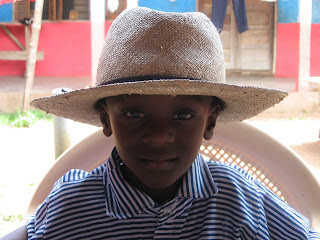
There are seven boys staying in Namaskar house most of them go to the school, the oldest Mahadev goes to a senior school else where is Ejura, and they all seem to work around the house as well. I've remembered most of their names but after only a day its difficult to keep track of everyone. I've been playing table tennis quite a bit with the boys but they are all very good so I've only won one game, still with a bit more practice I should be able to compete a bit more. So far I haven't seen much football being played, but I've been assured its quite common at the school.
The assistant head teacher, Richard, has told me that they show most of the Premier League games in a bar here – so next weekend I'll definitely be heading there. He also mentioned going to a Ghanaian league game in Kumasi at some point, apparently his team is playing there in a month. All things to be looked forward to!
The other volunteers are all very friendly, and both Holly and I are having a great time so far. As expected the internet is very slow here but we'll hopefully make time for more blogging soon.
So, after a long, hot journey, we're finally here!
We arrived in Accra slightly late, after our plane was delayed for an hour. Sitting on the plane, we looked at the in-flight map and realised we were flying over the Sahara Desert. Looking down, the clouds had cleared, so we could see all the dunes like tiny ripples in the sand. To see it in real life after having always read about it in books and seen it in pictures was a strange experience.
When we landed in Accra we could feel the thick humidity of the air in our mouths when we breathed. I was nervous about getting my visa checked, and it finally hit home that we were here, and would be for the next 5 months.
Shriidar met us outside the airport. Shriidar is an older gentleman who lives a little way outside Accra. He led us to his son's taxi. In the taxi rank, the first thing I noticed was the smell of petrol. Most people in Ghana drive battered old cars that are a good few years old, and the difference in the smell of emissions is quite surprising on the roads. Lots of the taxis have cracks or chips in their windscreens, and are quite bumped and bruised. Riding around in Ghana is a scary experience. In these old, battered cars the drivers go at top speed along bumpy roads without streetlights, road markings or signs. Swinging through junctions, no-one gives right of way but instead just beep as they cut each other up, make left turns without looking or overtake slower vehicles. Ghanaian businesses are often religiously named, so it's quite apt that these rickety vehicles often have painted slogans on the back of 'With Jesus' help' and 'By the grace of God'! The sight of overturned vehicles by the side of the road is not uncommon, and with no pavements, pedestrians are quite happy to walk on the side of the road, moving only when beeped at, or weaving in between slow moving vehicles trying to sell mangoes, water or crisps to the passengers inside.
Safely at Shriidar's house, shaken, but not overturned, we sat on the cool porch outside his house and there we met Danielle. Danielle is a Canadian volunteer, who is on her gap year from school. She's very friendly, and very positive, which I think will be useful when we get into the thick of teaching and the problems we might face.
Shriidar follows Ananda Marga, which is what Dada Shivesh, the project manager practices. This seems based on similar principles to Hinduism or Hare Krishna, they eat a vegetarian diet, with no eggs, onion or garlic. Shriidar told us that on Saturday night, there was to be a party celebrating his guru's birthday that would start at midnight and end at six the next morning, with celebrators taking it in turns to dance continuously from midnight to six. However, Shriidar couldn't attend that. He told us that he would be up at four in the morning to meditate for two hours. However, Shriidar was exaggerating a little when he said that. In reality, Shriidar got up at THREE o clock, to get washed and ready for meditation at four!
I can see why there is lots of action in the morning – by the evening, the air is so hot it's difficult to do much more than sit and drink water, but the mornings are considerably nicer. At half eight we took a taxi to the STC bus station, to make our way to Kumasi. The journey was estimated to take about six hours, so I was dreading it, but in fact, cars and buses, with their windows down, or their air conditioning on are about the coolest places you can find in Ghana! The bus was quite smelly of petrol and metal, but when we stopped off at services halfway and got our first taste of the afternoon sun, we realised how lucky we were to have air conditioning.
On the second half of the bus ride the TVs were flipped down and we were treated to a Nigerian film. The trailers were for 'Lagos Boys' and 'Lagos Boys 2', comedies about young boys drinking beer, kissing women and jumping on beds, and for various action movies about two men fighting over one woman. 'Rejected Son' was the movie we watched. Helen's boyfriend of seven years Syl, refused to marry Helen. Scandalously, just as he was refusing, Syl's mysterious fiance arrived, to the sound of stabbing synthesisers, and Helen ran away crying. Helen's friend rightly advised Helen to forget all about the treacherous Syl – but what would happen when both Helen and Syl's new fiance discovered they were expecting Syl's child?! I'm afraid, to find out, you'll have to buy 'Rejected Son' and the second part 'Rejected Son 2'.
We were supposed to travel to the STC station in Kumasi, to meet with some volunteers, but unfortunately, just outside Kumasi, the bus broke down, and we were all told to take our bags off and wait for a replacement. When the replacement didn't seem to be coming, we took a taxi to a tro tro station in Kumasi. The tro tros are minibuses that line up in the market. The tro tro driver is heading in one direction, and anyone who wants to go in that direction pays for a seat on his bus. Once the bus is full, it heads to its destination. Luckily, our tro tro was quite small and filled quite quickly, so we were soon off towards Ejura.
Halfway to Ejura, which was 2 hours from Kumasi, we saw our first downpour. We had to wind up the windows, and so in the steamy vehicle, with a sheet of rain over the windscreen, the driver drove, still at top speed, with one hand on the wheel and one wiping the windows, in the dark, beeping frantically at oncomers to avoid collison. Needless to say, when we arrived, we were quite relieved.
At Ejura, everyone knows Namaskar House, so someone quickly led us to Mahadev, who lives at the house. Mahadev and his friend helped us home and after eating some delicious food, we only had energy to shower and go to bed, finally in our room, which will be home now for three months.
JACK:
Hello to everyone,
Holly and I have arrived at the school in Ejura. There was a hectic few days of travel, but we've made it now.
Namaskar House where we're staying is lovely, its deep in the village off the main road so we're still getting to grips with the routes. Apart from four main roads Ejura is navigated by hundreds of paths, tracks and alleys, so every time we've been to the centre and the school we've gone a different way. Still getting lost isn't a problem, as the only "obrunis" (white/foreign people) in town the kids soon point us in the right direction. The standard call from all children is "hello obruni, how are you" to which we reply "I am fine, how are you". It seems this is the key phrase they all learn in school. They also tend to ask our names, so I'm now hearing a lot of "Jack" calls barked at me – my name is nice and easy to remember and shout.

There are seven boys staying in Namaskar house most of them go to the school, the oldest Mahadev goes to a senior school else where is Ejura, and they all seem to work around the house as well. I've remembered most of their names but after only a day its difficult to keep track of everyone. I've been playing table tennis quite a bit with the boys but they are all very good so I've only won one game, still with a bit more practice I should be able to compete a bit more. So far I haven't seen much football being played, but I've been assured its quite common at the school.
The assistant head teacher, Richard, has told me that they show most of the Premier League games in a bar here – so next weekend I'll definitely be heading there. He also mentioned going to a Ghanaian league game in Kumasi at some point, apparently his team is playing there in a month. All things to be looked forward to!
The other volunteers are all very friendly, and both Holly and I are having a great time so far. As expected the internet is very slow here but we'll hopefully make time for more blogging soon.
Subscribe to:
Posts (Atom)
